The need was easy to miss
Replacement cycles lived outside the appliance experience, so owners had to track them on their own.
 Katrina Li®

Turning everyday appliance moments into effortless replenishment.
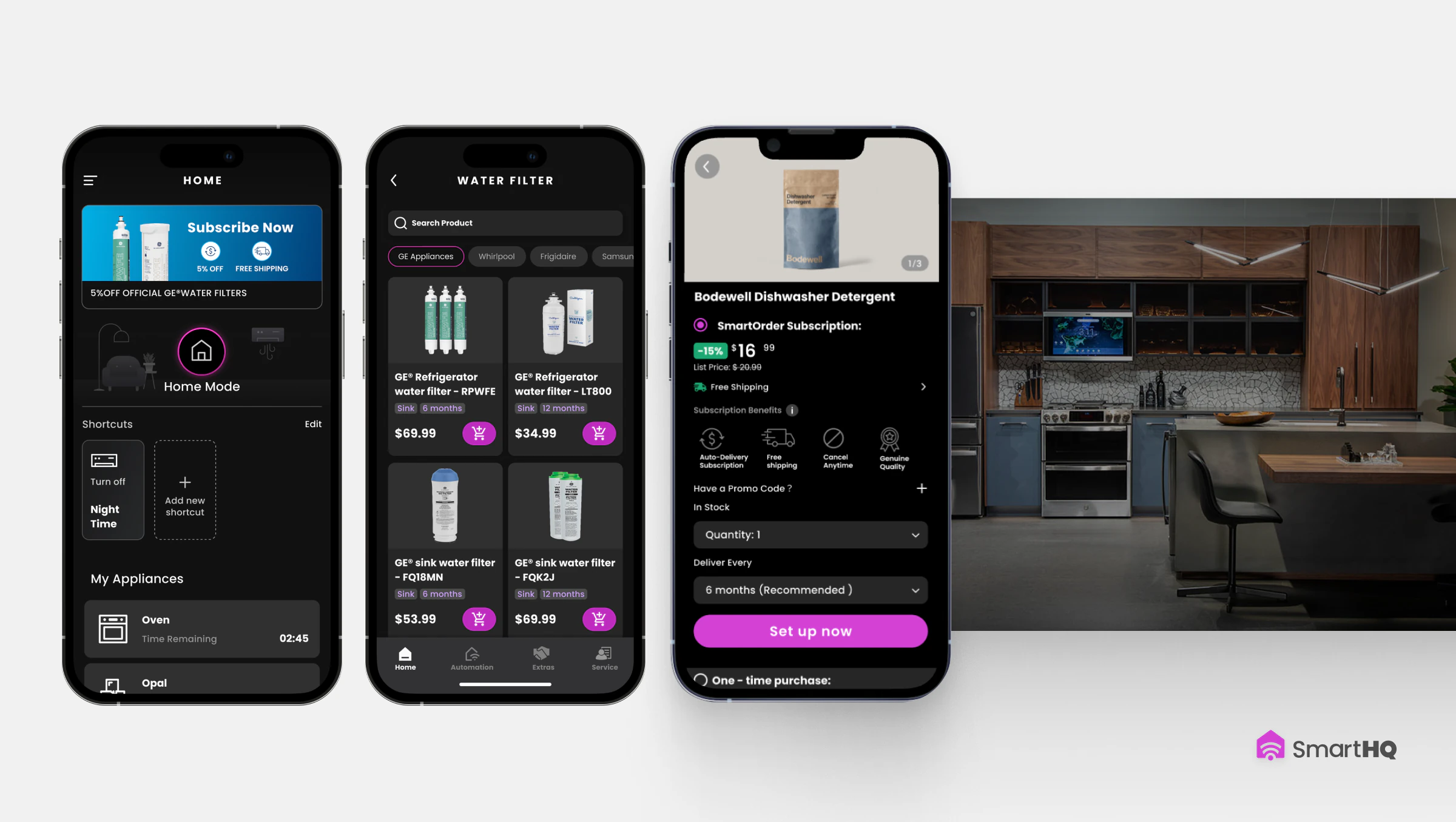
An embedded commerce layer that meets appliance owners at the moment replenishment intent appears.
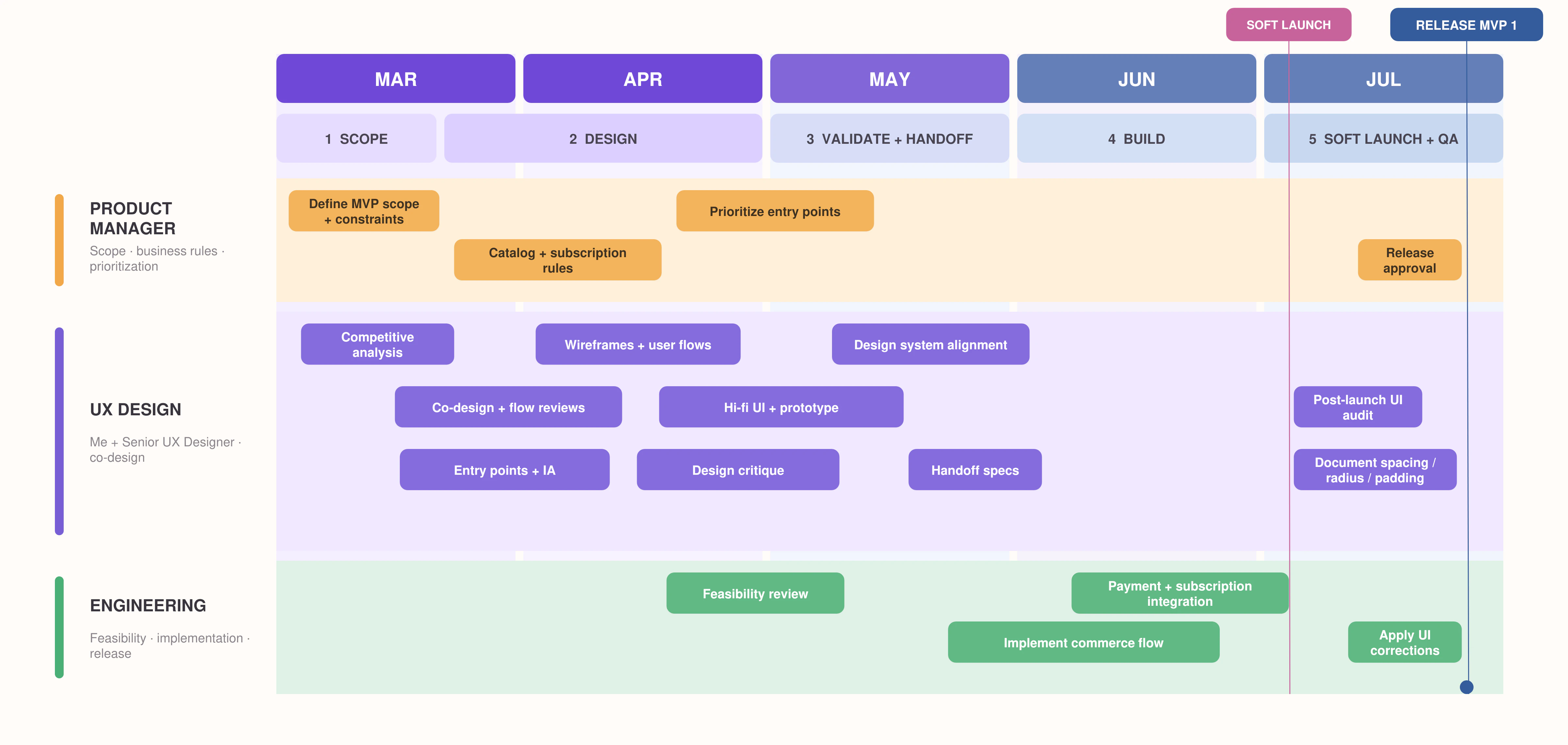
SmartHQ is GE Appliances’ connected-home platform, where people primarily monitor and manage their connected appliances. As the UX designer, I partnered with a senior UX designer, two product managers, and four developers to define the MVP and shape its core purchase flow. Marketplace introduced an embedded commerce layer within this ecosystem, reaching over 70% of connected GE Appliance owners in the U.S.
The appliance created the need. The purchase happened somewhere else.
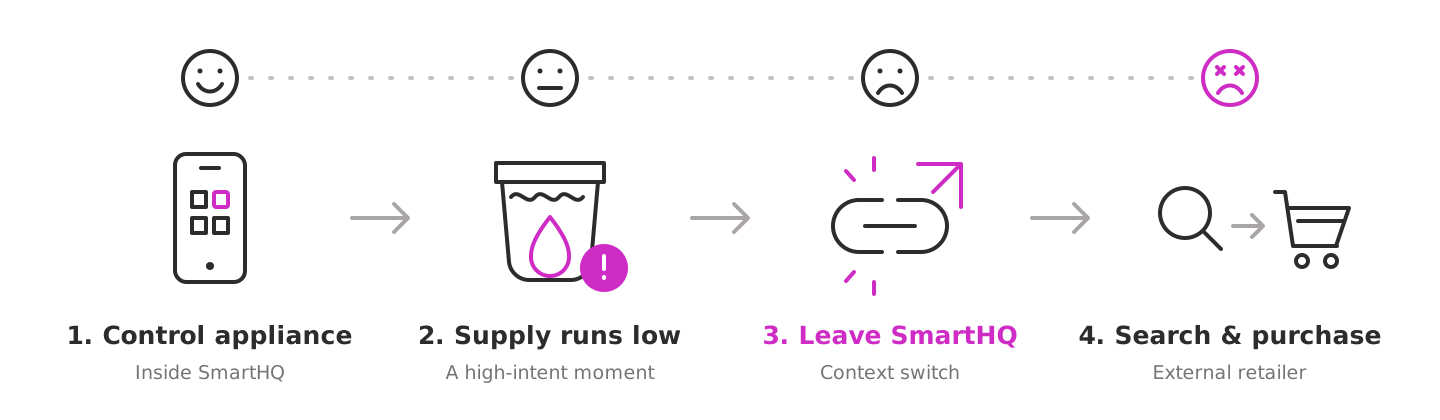
SmartHQ lost the customer at the moment replenishment intent was highest.
SmartHQ helped owners monitor and manage their appliances, but the experience stopped just before a recurring household need became urgent. When a refrigerator filter, dishwasher tablet, or laundry detergent needed replacing, people had to remember the timing, identify the right product, and leave SmartHQ to buy it.
Replacement cycles lived outside the appliance experience, so owners had to track them on their own.
Leaving SmartHQ meant searching other sites and platforms instead of moving directly from appliance need to a compatible product.
People opened SmartHQ to manage their home. A permanent Marketplace tab risked making a trusted appliance tool feel like a sales channel.
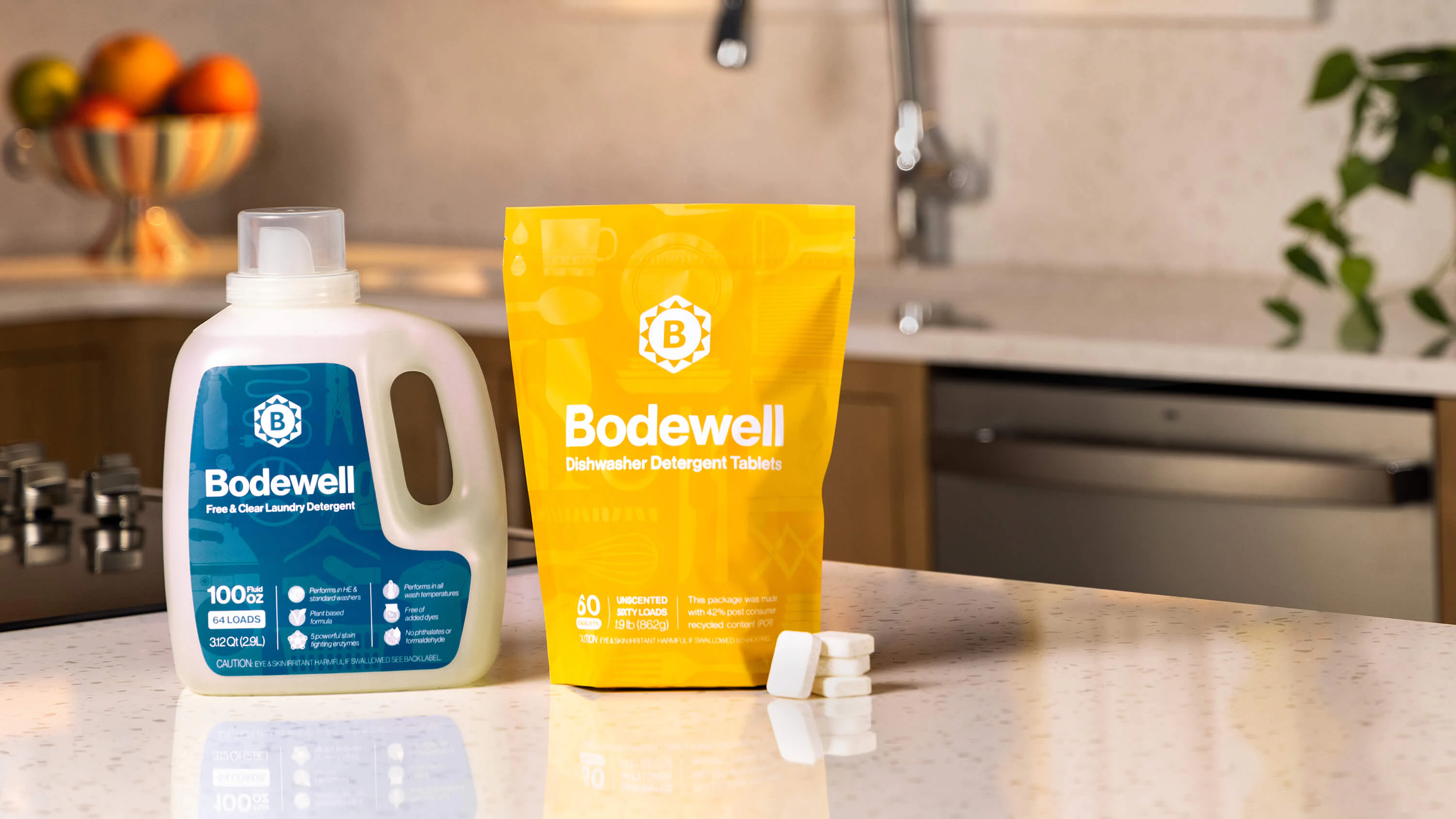
From product detail to checkout during internal and beta testing
$8,900,000 in projected revenue each year
Over half of all purchasers selected subscription
The disconnect pushed high-intent replenishment moments outside SmartHQ.


Product manager“Xuning, for Phase 1, we shouldn’t add a storefront or touch core navigation.”
Xuning“Got it. Then the hard part is figuring out how commerce can exist without feeling like one.”
If commerce couldn’t live in navigation, it had to appear at the right moments.
Four entry points across the appliance lifecycle
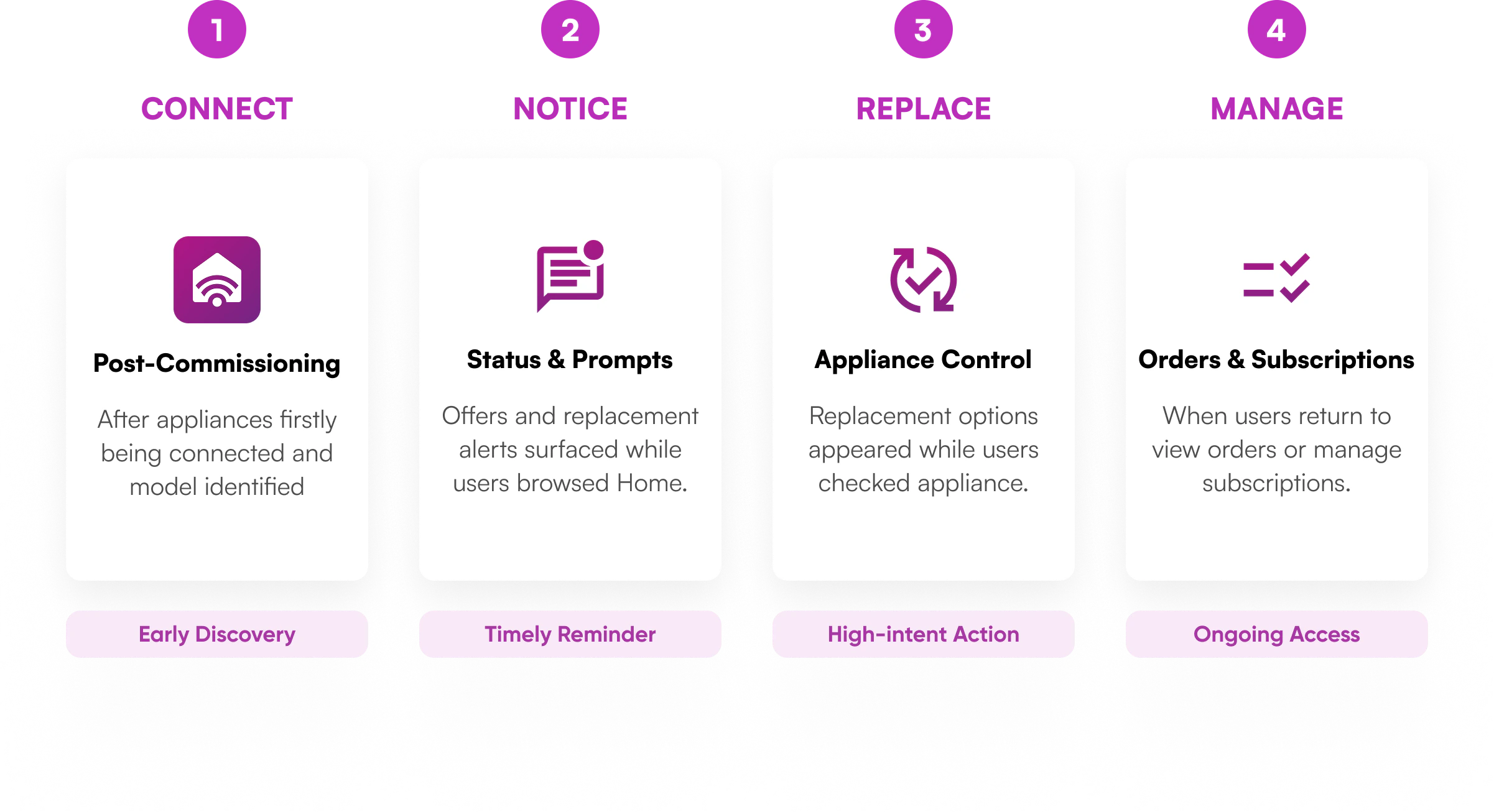
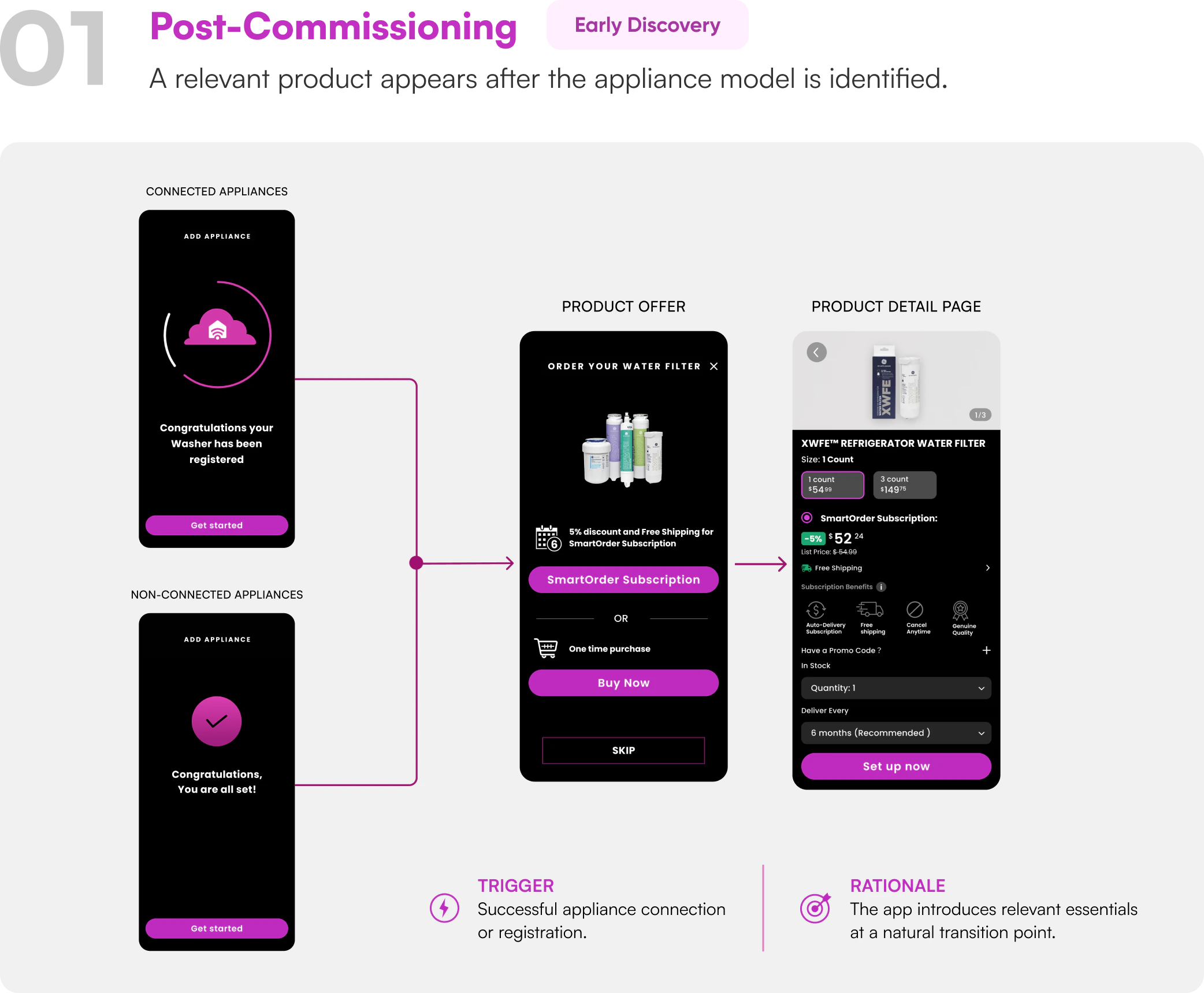
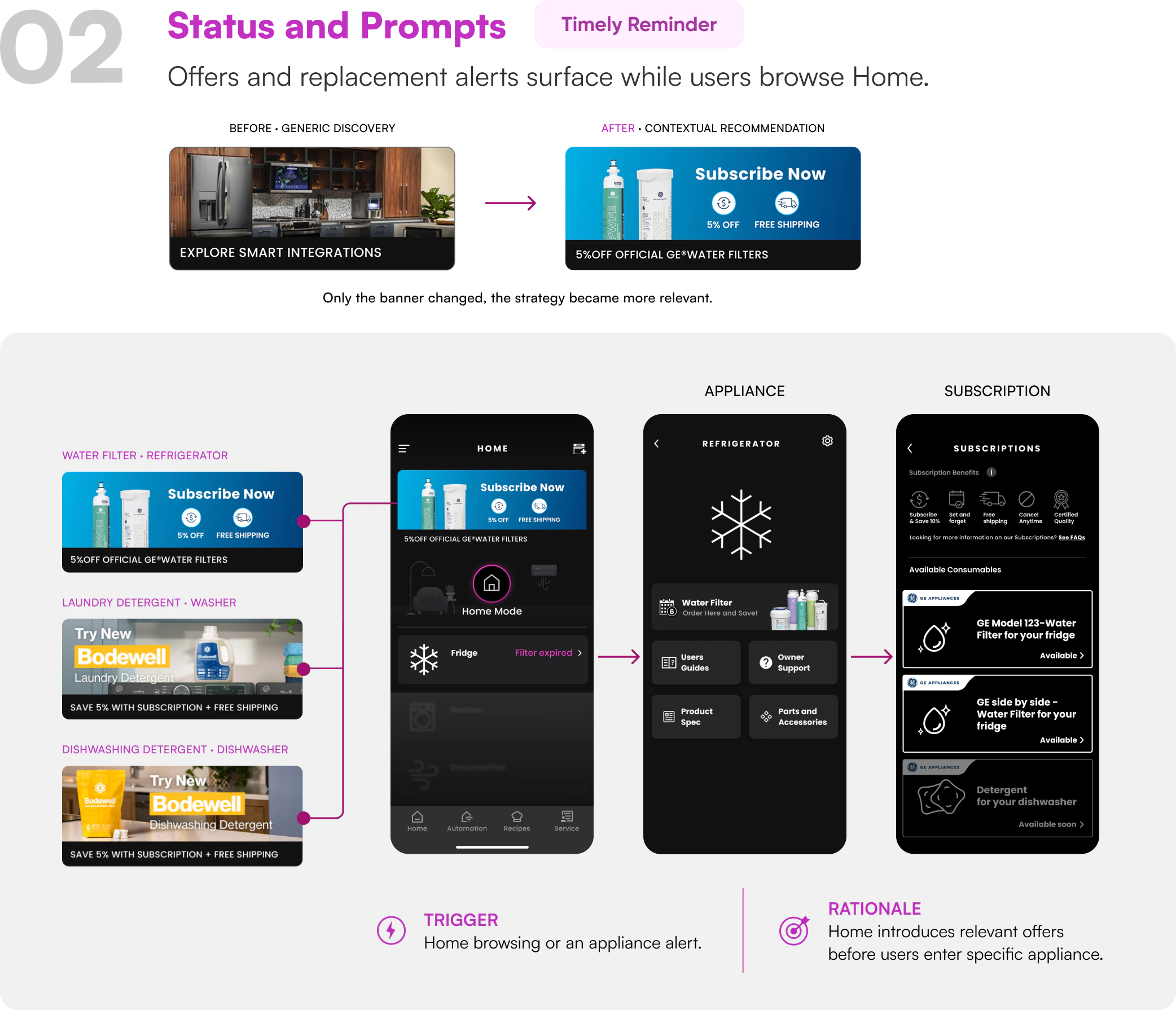
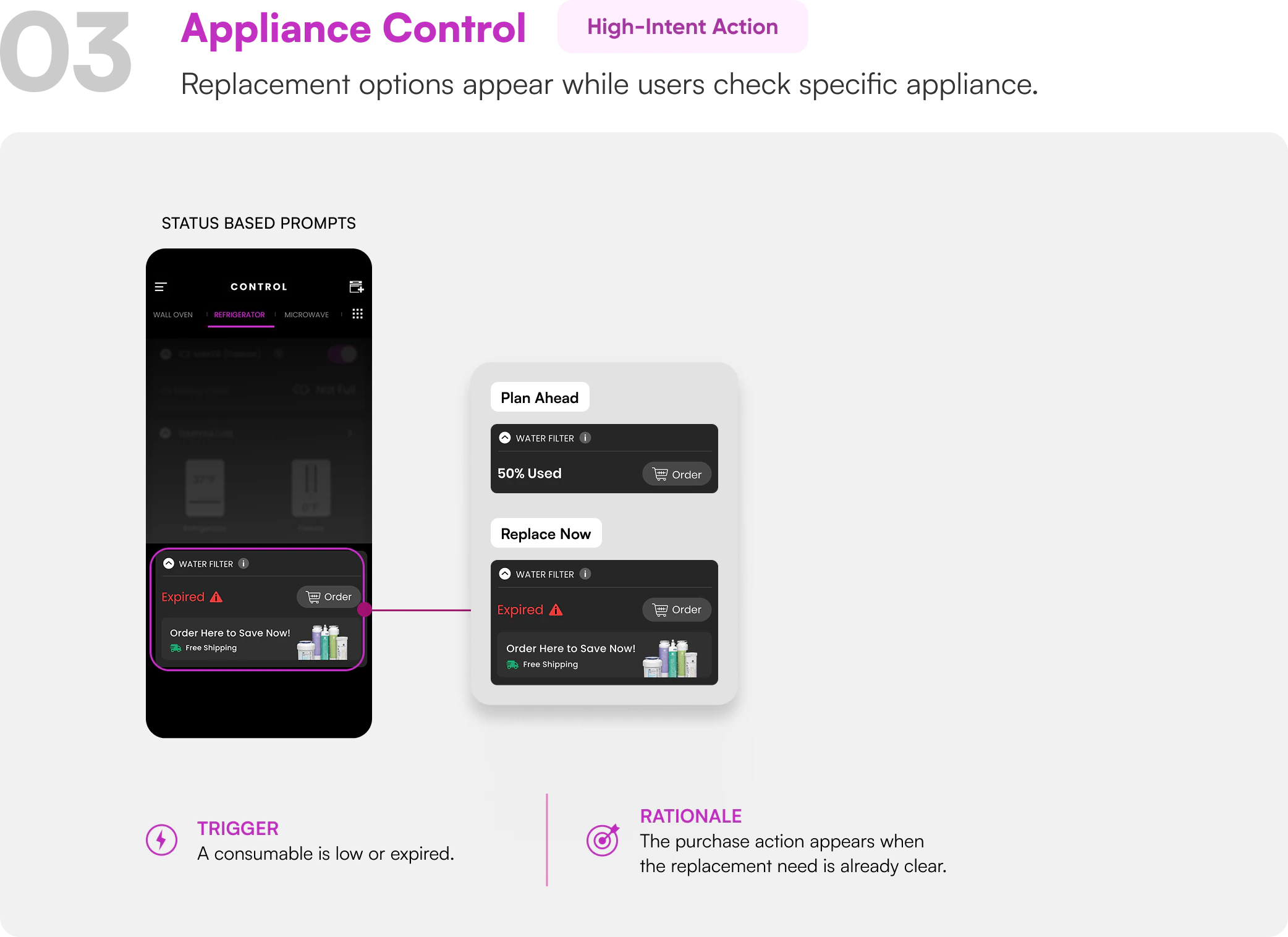

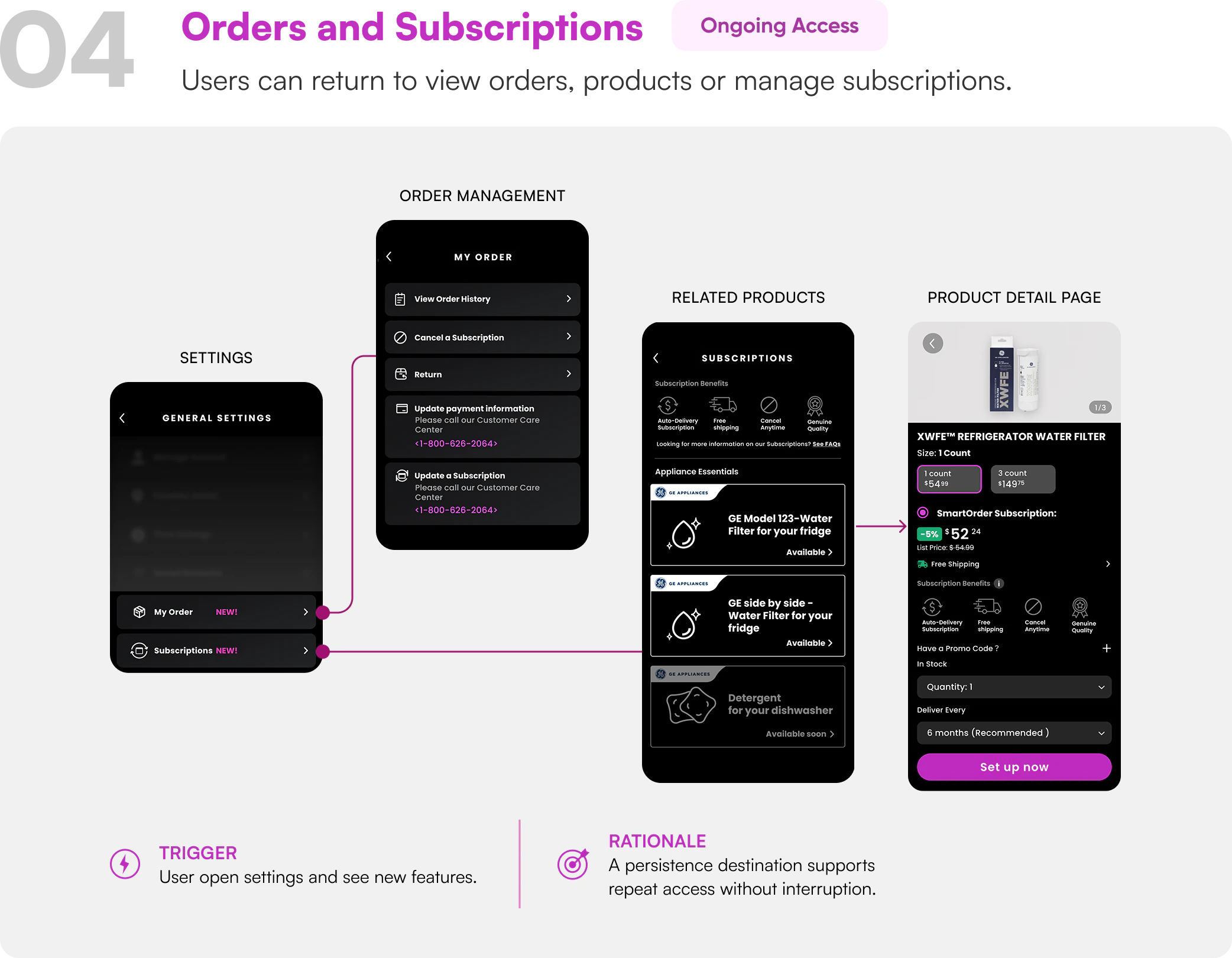

Commerce felt more natural when embedded into existing appliance moments rather than placed in a separate storefront.
Without changing the core navigation, we used contextual entry points to balance user needs and business goals.
Design QA and cross-functional collaboration were essential to carrying the intended experience into release.